
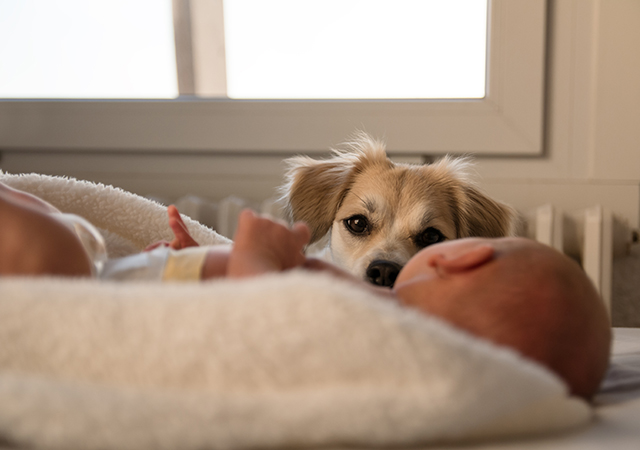
In this article we answer the following questions:
- How can I prepare my dog before my new baby arrives?
- What is the best way to introduce my dog to my baby safely?
- How do I tell if my dog is stressed by the new baby?
- How can I keep my dog’s routine and connection after baby arrives?
- What natural remedies can support my dog during this transition?
Start preparing early
The best time to start helping your dog adjust is before your baby arrives. Gradual change is much easier for animals to understand, especially if your dog is sensitive or anxious. Begin by reinforcing basic cues like “sit”, “stay”, “leave it”, and “go to your place”, so you have calm, reliable behaviour to lean on once your arms are full. At the same time, gently shift your dog’s routine, including walks, mealtimes, and sleeping spots, towards the pattern you want to follow once your baby is home. This way, the dog doesn’t associate every change with the baby’s arrival.
Now is the time to visit the vet to make sure vaccinations are up to date and have a general wellness check. If your dog isn’t sterilised, now is the time to do so, as this can help calm aggression and other behavioural issues. If your dog does have behavioural problems, ask your vet about a specialist trainer to curb these issues before the baby comes home.
Introduce new sights, sounds, and smells
For dogs, the world is made up of scent, sound, and movement. Before your baby arrives, invite your dog to explore baby-related items like the pram, car seat, cot, and baby blankets. You can play recordings of baby sounds at a low volume and slowly build up as your dog relaxes. Let them sniff baby lotions or laundry detergents that you’ll use, pairing these new smells with gentle praise or a small treat. In this way, your dog begins to link “baby” with predictable, pleasant experiences.
Create safe spaces and boundaries
Your baby and your dog both need safe spaces. Baby gates, playpens, and closed doors are boundaries that prevent accidents and give everyone room to breathe. Set up a cosy dog “sanctuary” like a bed, crate, or quiet room away from the main traffic of the house where your dog can rest without being disturbed. Many dogs cope better with new stressors when they know they can retreat to a familiar, peaceful corner whenever they need to.

The first introduction
When the big day comes and you bring your baby home, your dog will be picking up on your emotions as much as anything else. Greet your dog calmly without the baby first, especially if you’ve been away for a day or two, so they can release their excitement and reconnect with you. Once your dog has settled, introduce the idea of the baby at a distance. Let the dog sniff a blanket or clothing item first. Keep the first introduction short. Let your dog sniff the baby while on a leash. If your dog gets too excited, back off until they’re calm and try again. Keep treats on hand to reward good behaviour.
Read your dog’s body language
Your dog communicates constantly through their body language. Signs like yawning, lip licking, turning the head away, showing the whites of the eyes, or sudden stillness can indicate stress. Pacing, panting, excessive licking, or trying to hide are also signals that your dog is finding the situation overwhelming. If you notice these early signs, quietly create distance between dog and baby, and give them time to decompress rather than pushing through the interaction. Chewing, barking, toileting accidents, becoming overly attached to a family member, or changes in appetite and sleep are other signs your dog may be battling to adjust.
Keep routines and connection
Regular walks, playtime, and one‑on‑one affection tell your dog they are still an important part of the family and can ease feelings of confusion or jealousy. Exercise is a healthy outlet for stress and excess energy. If time is short, enrichment games at home like snuffle mats and food puzzles can help keep your dog’s mind and body engaged.
Natural, gentle support
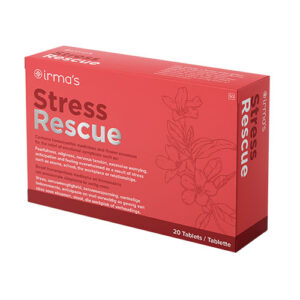 |
Bringing your new baby home can be stressful. Irma’s Rescue is a South African range of six affordable emotional health remedies, containing homeopathic medicines and flower essences to provide relief during life’s toughest moments. Here we think particularly of Irma’s Stress Rescue which is suitable for use in animals too! If your dog is showing signs of edginess, nervous tension or feeling overwhelmed by the changes at home, then this is the remedy for them. |
 |
Pegasus PET is a range of specialised homeopathic remedies that can safely support your dog through stressful situations. Choose Pegasus PET calming for anxiety, Pegasus PET aggression/fear for fear-based responses and Pegasus PET t.r.s. 200c (trauma, rescue, shock) for traumatic experiences and separation anxiety. |
Safety first, always
No matter how loving or well‑behaved your dog is, never leave any dog alone with a baby or young child. Both dogs and children can behave unpredictably when startled, tired, or over‑excited. Close supervision is the safest way to protect both. Teach gentle, respectful handling as your baby grows so your child learns from the beginning that animals deserve kindness.
When you prepare thoughtfully, respect your dog’s emotional needs, and lean on gentle, natural support where appropriate, you build a safe and loving foundation for a lifelong friendship between your dog and your child.
References and additional reading:
- ASPCA n.d., ‘Dogs and Babies’, American Society for the Prevention of Cruelty to Animals https://www.aspca.org/pet-care/dog-care/dogs-and-babies
- Blue Buffalo n.d., ‘Introducing Your Dog to Your Baby: 10 Tips’, Blue Buffalo https://www.bluebuffalo.com/articles/dog/introducing-dog-to-baby/
- Dogs Trust 2022, ‘How to prepare your dog for a new baby’, Dogs Trust, https://www.dogstrust.org.uk/dog-advice/life-with-your-dog/at-home/preparing-dog-for-new-baby
- Northeast Animal Hospital 2021, ‘Preparing and Introducing Your Dog to Your Newborn Baby’, Northeast Animal Hospital, 20 June https://northeastanimalhospital.com/news/expecting-baby-what-you-need-know-if-you-have-pet
- American Kennel Club 2026, ‘How to Introduce Your Dog to Your New Baby’, American Kennel Club, 16 February https://www.akc.org/expert-advice/advice/introducing-dog-to-baby/
- DialaVet 2025, ‘Tips to Train Your Dog to Accept a New Baby’, DialaVet, 5 June https://www.dialavet.com/blog/tips-to-train-your-dog-to-accept-a-new-baby
- American Kennel Club 2018, ‘Introducing Dog to Baby’, American Kennel Club, 15 July, viewed https://www.akc.org/expert-advice/training/how-to-introduce-babies-and-dogs/
- Best Friends Animal Society n.d., ‘How to Introduce a Baby to a Dog’, Best Friends Animal Society https://bestfriends.org/pet-care-resources/how-introduce-baby-dog